Throughout 2026, the ASPCA is sharing highlights from our organization’s rich and sometimes unexpected 160-year history
Henry Bergh founded The American Society for the Prevention of Cruelty to Animals on April 10, 1866, and wasted no time turning his vision into action. The landmark New York State anti-cruelty law, which he secured the passage of nine days later, “An Act for the More Effectual Prevention of Cruelty to Animals,” empowered the new organization to investigate complaints of animal abuse and make arrests.
Often cited as the first effective anti-cruelty law in the United States, the law prohibited overdriving or cruelly treating animals, staging animal fights, impounding animals without adequate food or water, transporting animals in a cruel manner and abandoning sick animals to die in public places. Although early enforcement focused largely on horses and farm animals, the law’s language extended protections to “any living creature.” Bergh returned repeatedly to the Legislature to push for amendments to strengthen the statute.
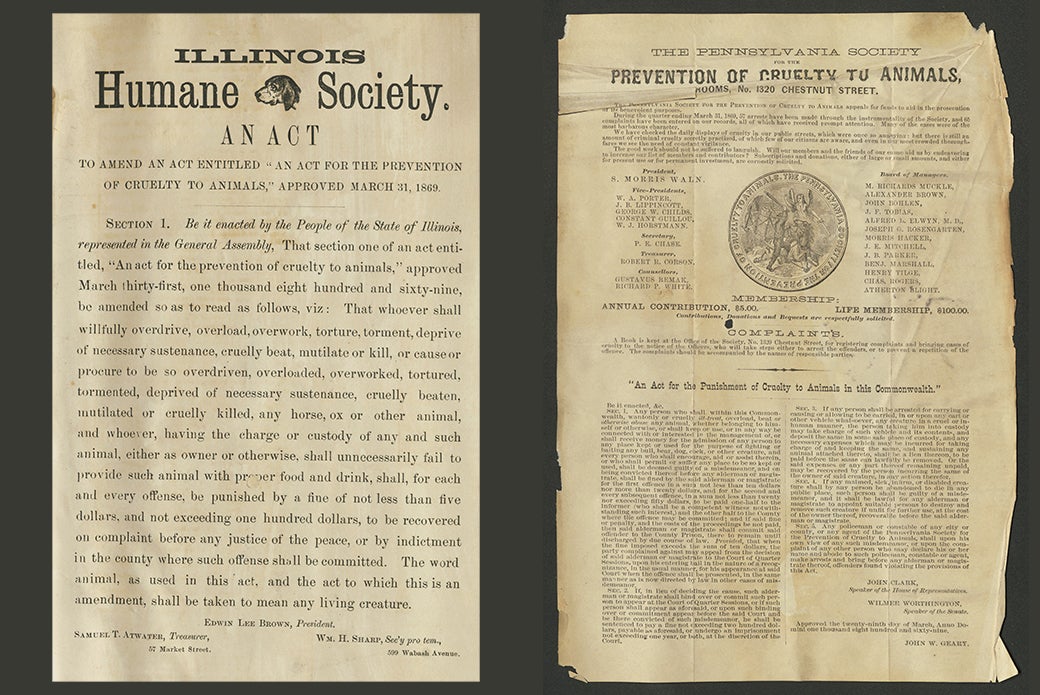
The ASPCA inspired other states, including Pennsylvania and Illinois, to create humane societies and pass similar anti-cruelty laws.
The passage of New York’s anti-cruelty law had nationwide impact: Anti-cruelty laws were adopted in other states, and animal protection societies were formed — many with their own agents empowered to enforce the law, just as the ASPCA did.
Since our founding, the ASPCA has steadily expanded our legislative advocacy on behalf of companion animals and other species. By the 1980s, the ASPCA employed part-time lobbyists in Albany, New York and Washington, DC, and by the mid-1990s had launched a Government Affairs and Public Policy department to advance animal-protection laws nationwide.
Today, the ASPCA’s legislative team includes more than 20 staff members located throughout the nation and the District of Columbia, working on local, state and federal laws for animals — a scope Bergh could scarcely have imagined.
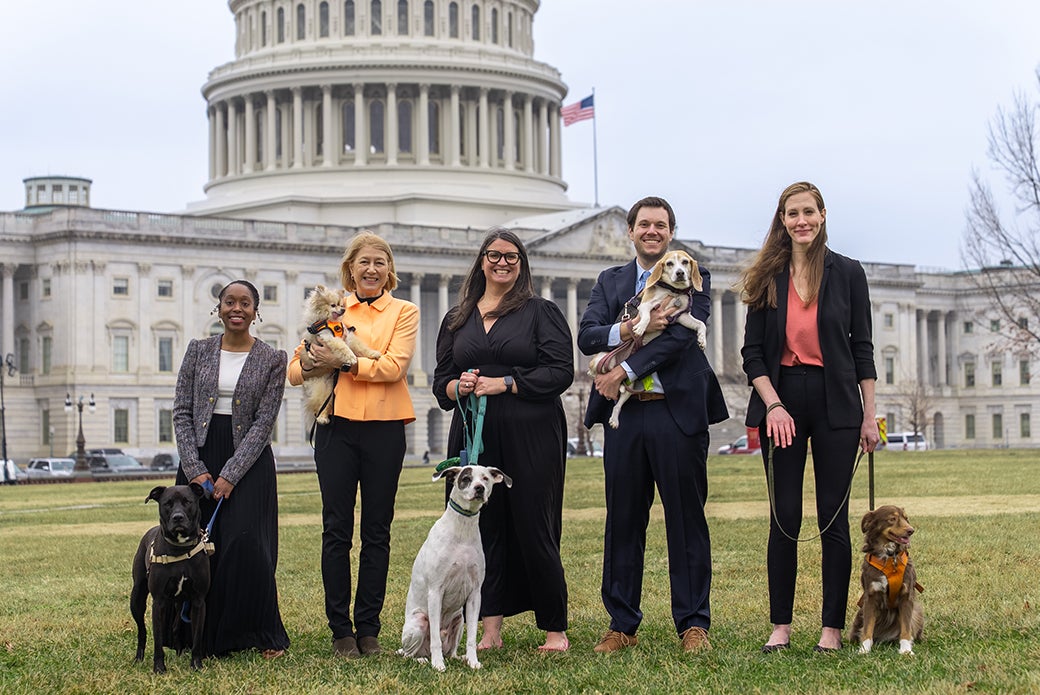
The ASPCA’s federal legislative team includes, from left: Brynáe Riggins, Nancy Perry, Maggie Garrett, Daniel Leonardini and Meredith Hou.
The ASPCA’s current key policy issues include, but are not limited to:
Ending the abuse of dogs in puppy mills and banning retail and online puppy sales
Strengthening enforcement of anti-cruelty laws
Expanding access to care and critical resources for owned pets
Preventing cruelty to horses
Building a more humane food and farming system
Ensuring disaster preparedness that protects animals and families
State Highlights
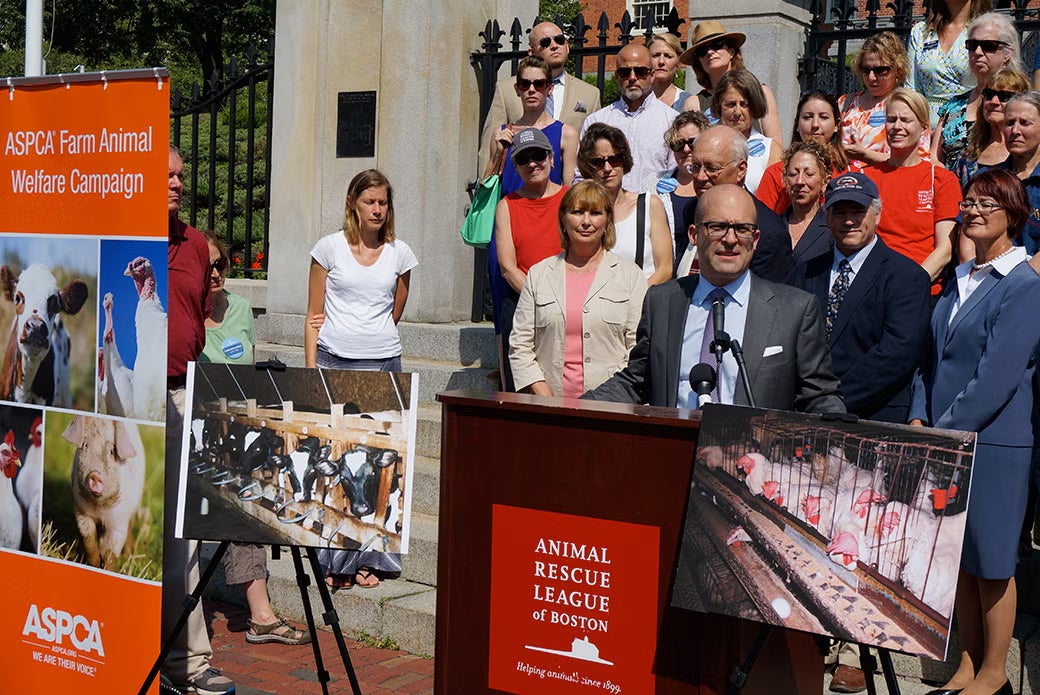
ASPCA President and CEO Matt Bershadker speaks at a 2015 press conference hosted by Citizens for Farm Animal Protection, a coalition of animal welfare groups that included the ASPCA, in support of a Massachusetts ballot proposal to phase out extreme and inhumane confinement systems used in factory farms. The ballot measure and subsequent law were passed.
Across the states, the ASPCA has driven impactful legislation and turned advocacy into action, advancing laws that shut down puppy mills, expand pet-friendly housing, protect consumers and farm animals, and improve access to veterinary care. Recent achievements include:
Puppy mill reform: In New York, the ASPCA was a main driver behind passage of the Puppy Mill Pipeline law, which ended the sale of cruelly bred puppy mill dogs in pet stores across the state. The ASPCA also helped enact a first-in-the-nation measure in California that prevents brokers — middlemen — from skirting the state’s prohibition on selling puppy mill dogs online to Californians.
Housing protections: The ASPCA has led efforts in multiple states to increase access to pet-friendly housing. California now prohibits no-pet policies in publicly funded housing, and Colorado prohibits excessive pet fees from being included in rent.
Consumer protections: The ASPCA also achieved first-in-the-nation bans on insurance-company breed discrimination in New York, Nevada and Colorado. We also took on the predatory practice of pet-leasing, securing wins in California, Nevada and New York.
Farm animal protections: In California, Prop. 12, approved by voters in 2018 and fully effective as of late 2022, requires cage-free housing for animals typically confined inside factory farms: veal calves, mother pigs and egg-laying hens. A similar ballot measure passed in 2016 in Massachusetts, Question 3, bans the cruel confinement of these same animals — and took full effect on January 1, 2022. Both laws, supported by the ASPCA, prohibit the sale of pork, veal and eggs derived from prohibited confinement methods, even if produced outside these states.
Federal Highlights
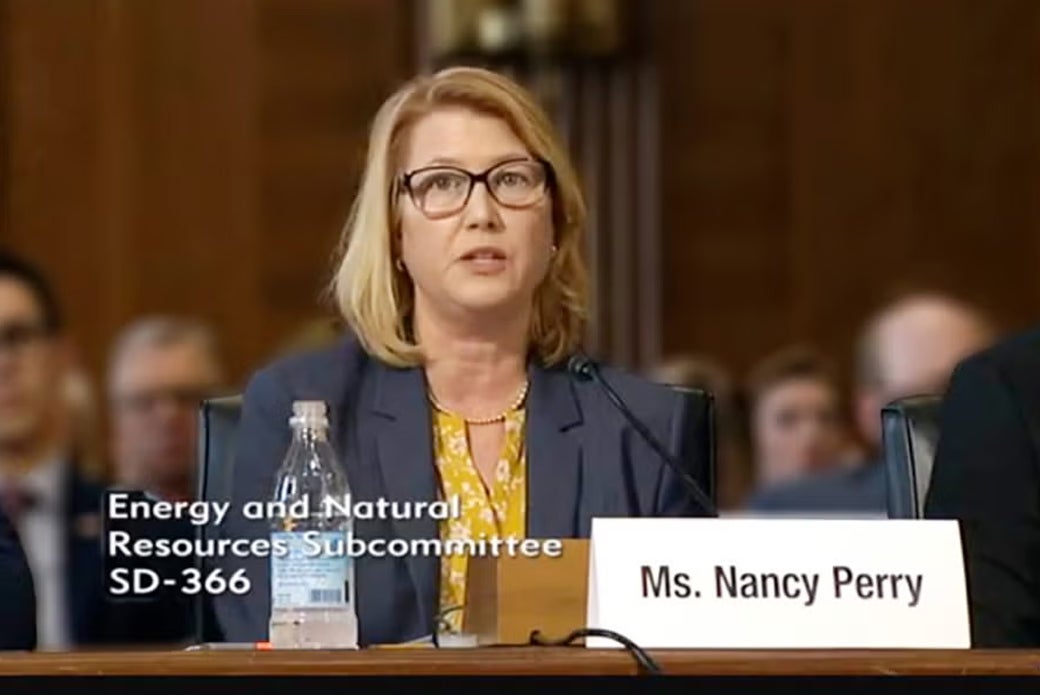
The ASPCA’s Nancy Perry, senior vice president of Government Relations, testifies before the U.S. Senate Energy and Natural Resources Subcommittee on Public Lands, Forests, and Mining about the path forward to humane and sustainable management of wild horses and burros.
Over the past two decades, ASPCA-backed federal legislation has protected animals impacted by cruelty, neglect, disaster and exploitation.
Farm Animals
The 2023 federal budget directed the U.S. Department of Agriculture (USDA) to reform its rules for meat and dairy labels to ensure that claims like “humanely raised” and “natural” are meaningful and reflect consumer expectations.
The USDA’s updated Organic Livestock and Poultry Standards Rule (2023) prohibits cruel practices such as debeaking birds, tail-docking of pigs and housing pregnant pigs in gestation crates.
Animal Cruelty
The Animal Fighting Spectator Prohibition Act(2014) made attending an animal fight a federal crime and closed a loophole that previously protected spectators at these events. It also created penalties for bringing children to an animal fight.
Congress has renewed annual funding bans on horse slaughter inspections since FY2014, effectively preventing horse slaughterhouses from operating in the United States following the closure of the last such facilities in 2007.
The Pet and Women Safety Act (2018) protects victims of domestic violence and their pets. The law makes it a federal offense to cross state lines to injure a pet, adds veterinary care to the list of restitution costs recoverable by victims, authorizes emergency assistance and housing to victims and pets and recommends that states include pets in protective orders.
The Veterinary Medicine Mobility Act (2014) helps animals in crisis by enabling veterinarians to more easily perform services in the field, regardless of their fixed business address.
The Planning for Animal Wellness (PAW) Act (2022) mandates collaboration between government agencies and outside experts to review and update best practices for companion, service and assistance animals in disaster preparedness, response and recovery efforts.
Get Involved!
Join the ASPCA Advocacy Brigade to stay informed about animal welfare legislation and receive resources to take action. Your voice can make a difference!