
How to Stay Prepared and Keep Your Pet Safe During Natural Disasters

September is National Preparedness month, and we cannot stress enough how important it is to make sure you and your pet know how to weather any storm. During this time of the year, many parts of the country experience extreme weather, hurricanes, flooding and more, and disaster preparedness is critical to keep your pet safe and calm during emergency situations.
We recently spoke with longtime ASPCA supporter, Rachael Ray, who through her own charitable initiative, the Rachael Ray Foundation™, has generously provided a $400,000 grant to support disaster response and relief efforts. In addition to the grant, Rachael also wanted to help highlight the importance of having a plan in place for you and your pet during a disaster, adding some of her key tips to our expert list of “go bag” items that help her and her dog Bella Boo stay prepared.
Keep Your “Go Bag” Ready
Keeping a “go bag” is a simple and effective way to stay prepared at all times.
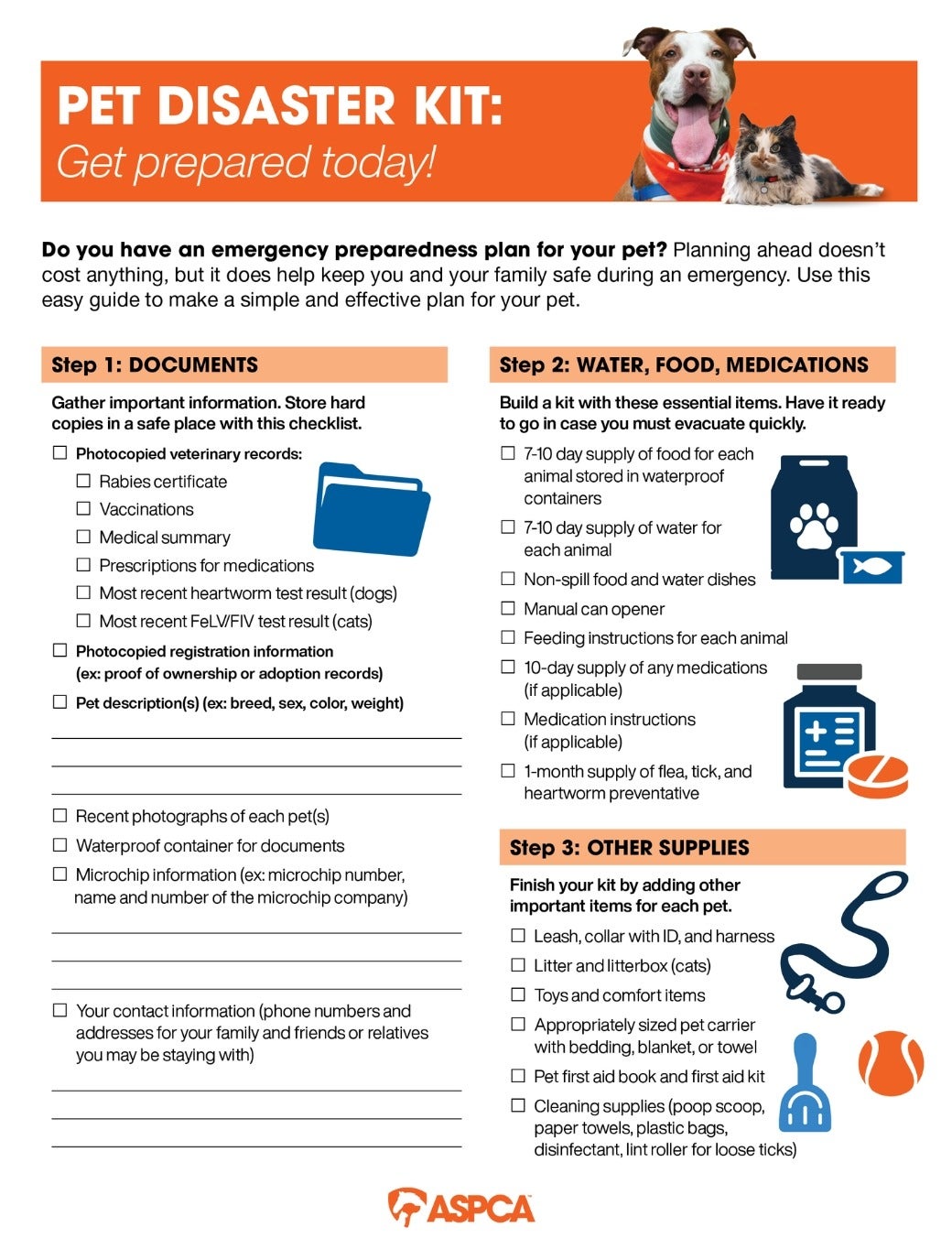
Be sure to include:
- Food and water for at least seven to 10 days
- Extra Tip from Rachael: I always make sure that Bella Boo's go-bag includes at least seven days’ worth of Nutrish™ dry dog food. Having familiar food on hand not only supports Bella Boo's nutrition but also offers comfort and routine during a potentially chaotic time.
- A water bowl, feeding dish and manual can opener if needed
- Extra Tip from Rachael: Pack ample bottled water for both you and your pet — typically one ounce per pound of body weight per day. Include a lightweight, collapsible travel bowl in your bag so they can hydrate safely anywhere.
- Two weeks’ worth of your pets medication
- A spare collar and leash
- A copy or USB of crucial medical information
- Extra Tip from Rachael: Ensure your pet wears a secure collar with an ID tag that includes your current phone number and a temporary contact backup. Pack a Ziploc bag with a recent photo of your pet, plus photocopies of their veterinary records (vaccinations, microchip info), all sealed in waterproof packaging, so you have everything handy if you're separated.
- Familiar toys or bedding
- Extra Tip from Rachael: Disasters can be terrifying for pets. Include a small soft blanket or bandana scented with home laundry detergent so your pet has comforting smells. A favorite chew toy can help distract and calm them when noise and upheaval threaten to overwhelm.
- Litter or newspaper for a litter box for cats
- Garbage bags
- Pet first aid
- Extra Tip from Rachael: Include basic pet-safe first-aid: sterile gauze, adhesive bandages and a pet wrap. Add a natural, vet-approved soothing salve for minor cuts or hot-spot irritation — such as one made with aloe vera and calendula, which are known for their gentle healing properties.
- Any traveling bags, crates or carriers for each pet
To help you keep this vital information in one easy location, download our Pet Disaster Kit checklist.
Be Mindful of These Additional Items
- Emergency shelters may not allow pets, so have a list of local boarding facilities, hotels/motels or nearby friends that will allow you to stay with your pet.
- All pets should wear collars and tags with up-to-date identification information. Your pet’s ID tag should contain their name, your telephone number and any urgent medical needs. Be sure to also write your pet’s name, your name and contact information on your pet’s carrier.
- The ASPCA recommends microchipping your pet as a more permanent form of identification. A microchip is implanted under the skin in the animal’s shoulder area and can be read by a scanner at most animal shelters. Be sure you have registered your pet’s microchip, and the microchip registration database has your current contact information.
- We always recommend evacuating with your pets, but if you are forced to leave them behind in your home, be sure to put a safety alert somewhere highly visible to let emergency responders know that there is an animal in the house.
How to Help a Scared Pet
If your pet struggles with storms, there are many things you can do at home to help them stay calm. See our full list of tips for keeping them calm and combatting storm phobia in pets.
Share this page: