

This page contains links that lead to aspca.org/chewy. If you purchase any items through the affiliate links on that page, the ASPCA may receive a commission at no additional cost to you. Thank you for your support!
Every year, ASPCA Poison Control complies its data to examine what types of toxins pets are encountering. In 2025, ASPCA Poison Control received calls about over 376,000 items that pets were exposed to.
This week is National Poison Prevention Week, which makes it the perfect time to share our top 10 pet toxins of 2025 as a reminder of which household items pet parents should be aware of.
See the list below and be sure to keep the following items secure and out of paws’ reach!
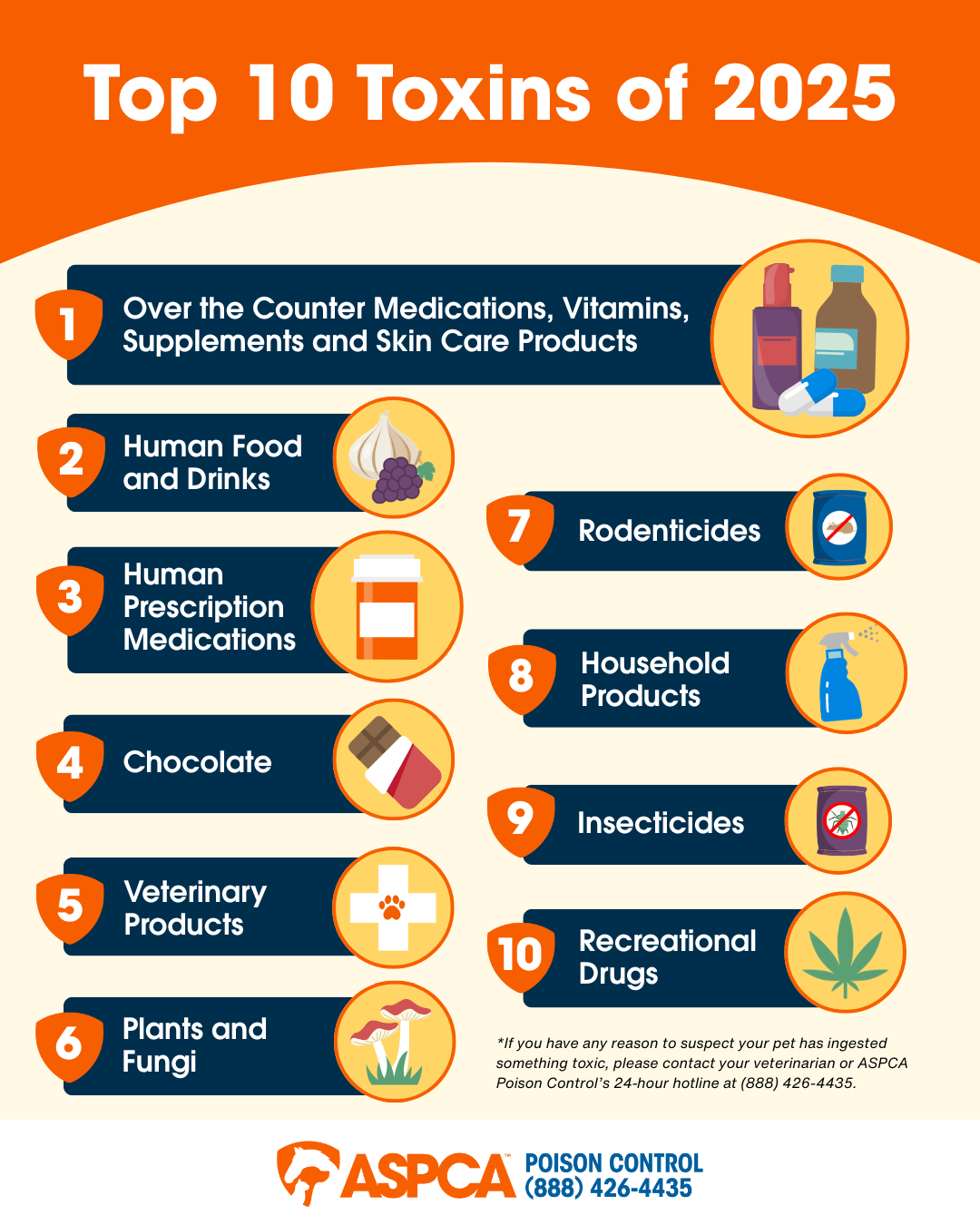
1. Over-the-counter (OTC) medications and supplements remain at number one and have increased their lead, covering 16.9% of the exposures our experts received calls about. A significant part of this increase is the popularity of new skin care products (masks and creams) promoted on social media. Vitamins, dietary supplements and pain medications still make up most of these exposures. These items are often found in homes and in all sorts of hiding places like backpacks and purses. People may also accidentally drop their vitamins and supplements or leave bottles of pain medications where pets can access them.
2. Food and drink remain at number two with 16.4% of the calls. Grapes, raisins, xylitol gums, onions and garlic make up the largest part of this group. Be vigilant about any human food or drinks that may be lying around or in an open garbage for hungry pets to get to.
3. Human prescription medications remain in the third spot with heart medications, antidepressants and ADHD medications as the most ingested types of medication. Make sure your prescription medications — and OTC medications — are in closed cabinets that snooping noses cannot reach.
4. Chocolate makes up 13.6% of the exposures and comes in at number four. Dogs are the most common culprit that get into trouble. While cats may sample the chocolate, they likely won’t eat huge amounts like dogs do. Remember, dogs don’t have an “off button” when it comes to food and can easily eat an entire pan of brownies.
5. Veterinary products are at number 5 this year, covering 9.1% of the exposures, an increase from 2024. Many of these exposures involved over-the-counter flavored chewable tablets or soft chews (like calming chews, joint care, etc.). These forms make it easy to administer but greatly increase the risk of ingestion of the whole container. It’s best to keep these locked away.
6. Plants and fungi remained at number six, covering 7.5% of the exposures in 2025. The number of overall plant exposures continues to drop, but it’s important to still be cautious. Both indoor and outdoor plants can cause a threat to our four-legged friends, so make sure to check out our list of toxic and non-toxic plants before bringing a new plant into your home or garden.
7. Rodenticides are again number seven covering 6.5% of toxin exposures. Safe placement of rodent bait is important in households with pets.
8. Household products remained at number eight, covering 6.4% of exposures in 2025. Cleaners and paints made up a large amount of these exposures.
9. Insecticides are at number nine, covering 3.8% of exposures last year. Reading labels about correct dilution and putting bags away after use can reduce the risks of accidental ingestion.
10. Recreational drugs like marijuana and psychedelic mushrooms round out the top 10, covering 1.9% of the exposures. There has also been a recent increase in exposure of Kratom, a pain relief medication. Be sure to always keep medications where pets can’t find them!
If you have any reason to suspect your pet has ingested something toxic, please contact your veterinarian or ASPCA Poison Control’s 24-hour hotline at (888) 426-4435.