Partnering with Shelters and Helping Animals in Communities Nationwide
The ASPCA partners with shelters, rescues and community organizations across the country to increase lifesaving opportunities for animals and strengthen local capacity. From relocation and placement programs to shelter medicine training, grant funding and direct services, the ASPCA supports a broad network of partners working on the front lines of animal welfare.
In 2024, the ASPCA provided hands-on assistance, strategic funding and expert guidance to hundreds of organizations, helping move animals out of overburdened shelters, increasing access to veterinary care and creating sustainable programs that serve animals and their communities for the long term.
Sharing Behavioral Rehabilitation Learnings and Resources
Strengthening Shelter Medicine Nationwide
Creating Pathways to Adoption Through Relocation and Placement
Helping Vulnerable Animals Find Homes in New York City and Los Angeles
Strengthening Shelters and Indigenous Communities in the Country’s Northern Tier
Opening New Doors for At-Risk Equines
Strategic Grantmaking to Strengthen Animal Welfare Nationwide
Sharing Behavioral Rehabilitation Learnings and Resources
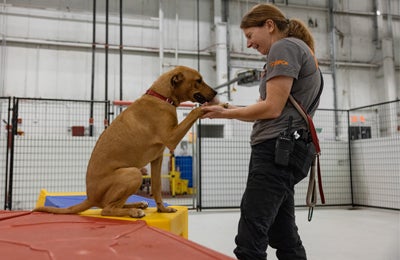
One of the biggest challenges facing animal shelters across the country is the lack of behavioral support to help prepare animals for adoption. The ASPCA’s multifaceted behavior and rehabilitation programs and expertise help guide animal welfare professionals to support the vulnerable animals in their care.
In 2024, the ASPCA’s Learning Lab, a resource for animal welfare professionals, continued to expand its reach, empowering shelters nationwide to strengthen their behavior programs and provide more vulnerable animals with a path to recovery and adoption through a mix of virtual and in-person learning opportunities.
Through the Learning Lab and ASPCApro.org, the ASPCA shares practical insights and proven tactics to help shelters across the country rehabilitate animals struggling with trauma and fear, ultimately increasing their chances of adoption and a better life.
The ASPCA’s Shelter Behavior Apprenticeship provided hands-on instruction and coaching to more than 25 participants in 2024, including staff from the ASPCA and four organizations that partner with us, giving them a solid foundation for a career in animal behavior. Additionally, three organizations — Massachusetts SPCA, the Humane Society of Charlotte and Mountain Humane — joined the Shelter Behavior Partnership Program.
In 2024, the ASPCA’s Behavioral Sciences Team conducted forensic behavior evaluations for more than 300 dogs involved in criminal cruelty cases, providing evidence to support prosecutions, helping inform treatment plans and outcomes for the dogs and sharing with the animal welfare field what we learn about these most vulnerable animals.
The Behavioral Sciences Team also contributed to the field in multiple ways: sharing new knowledge through in-person and virtual trainings, conferences and textbook chapters, such as Psychological Trauma as a Form of Animal Cruelty, the development of job aids designed to help our behavior teams perform their life-saving work and systematic welfare projects aimed at advancing shelter behavior practices nationwide, such as assessing the efficacy of a simple intervention to reduce the likelihood of dogs barking and spinning when in their kennels.
Through its expertise and innovation, the Behavioral Sciences Team is helping shelters provide better care and brighter futures for animals in need.
Partnership Helps Dozens of Shelter Dogs Find Greater Adoption Opportunities
On June 22, 2024, 40 dogs were flown from Mobile SPCA in Mobile, Alabama, to Bedford Massachusetts. The dogs were then driven to MSPCA-Angell: Northeast Animal Shelter where they were made available for adoption. Read more about this lifesaving collaboration.
Strengthening Shelter Medicine Nationwide
In 2024, the ASPCA’s Shelter Medicine Services team advanced animal health and welfare by focusing on access to veterinary care and strengthening shelter medicine programs nationwide. Through training, research and expert consultation, Shelter Medicine Services supported shelters, clinics and veterinarians across the country.
The team provided mentorship and hands-on training to more than two dozen veterinarians working toward board certification in shelter medicine through the ASPCA’s Residency and Practitioner Pathway programs, helping to build the next generation of shelter medicine leaders.
Creating Pathways to Adoption Through Relocation and Placement
In 2024, the ASPCA relocated more than 25,000 shelter dogs and cats through over 700 ground and air transports — a 13% increase from 2023, driven by expanded capacity at destination shelters and new transport partners. As the largest transporter of shelter animals for adoption in the U.S., the ASPCA works with partners in 40 states to move animals from overburdened shelters to communities with higher demand for adoptable pets.
Since 2014, the Animal Relocation & Placement Program has moved over 280,000 animals, helping reduce overcrowding and giving source shelters the space and resources to strengthen their local programs.
Helping Shelters Help Animals: One Cat’s Journey to a New Life
Severe storms rolled through North Texas in April and May bringing rain, hail and an EF3 tornado. More than 200 homes and businesses were impacted, including All American Dogs, an animal shelter in Denton County. Despite their name, All American Dogs also serves cats. In one of two operations, the ASPCA’s Relocation and Placement team loaded 60 felines on a flight to our Cruelty Recovery Center in Ohio. One of those cats was Leo, a year-old adult male tabby. Leo was then transported to the Greenville Humane Society in Greenville, South Carolina, and adopted by a young couple looking for a four-legged friend. His story illustrates how the ASPCA helps at-risk animals find new beginnings. See Leo’s full story.
The ASPCA’s Centralized Placement Program helps prepare and place animals rescued from cruelty cases and natural disasters. In 2024, more than 800 were transferred to partner shelters across the country. Through grants and support, the program also builds capacity for partners to serve more animals in their own communities.
Helping Vulnerable Animals Find Homes in New York City and Los Angeles
The ASPCA Adoption Center in New York City continues to lead innovative strategies for placing harder-to-adopt animals, supporting more than 2,000 animals through foster and adoption in 2024. Many were rescued through the ASPCA-NYPD partnership or transferred from Animal Care Centers of NYC.
The ASPCA Kitten Nursery — New York City’s first and largest facility dedicated to neonatal kittens — has cared for nearly 12,000 kittens since 2014. By housing kittens at the nursery and in foster homes, the ASPCA has helped reduce euthanasia rates at Animal Care Centers of NYC and conserved vital shelter resources.
In Los Angeles, the ASPCA’s Kitten Foster Program, launched in partnership with LA County Animal Care Centers, supported 1,781 kittens in 2024 with the help of over 500 foster volunteers. Many were adopted locally or transported to shelters in the Pacific Northwest, giving them a second chance while easing pressure on the county’s shelter system.
Cats on Two Coasts Embody the Essence of National Kitten Day
In 2024, the ASPCA celebrated 10 years of providing lifesaving support to more than 23,000 of the most vulnerable kittens in New York City and Los Angeles. We routinely take in kittens under 8 weeks old who are too young to be cared for in shelters. With the crucial support of foster caregivers, we’ve saved 11,000 kittens through our Kitten Nursery in New York City and 12,000 through our Los Angeles Kitten Foster Program. In 2024, we dedicated National Kitten Day to two kittens from foster programs on both coasts: Banjo and Fluffy. Both were sourced from crowded shelters in New York and Los Angeles and are now thriving thanks to the foster care that transformed their futures. See Banjo’s and Fluffy’s full stories.
Strengthening Shelters and Indigenous Communities in the Country’s Northern Tier
In 2024, the ASPCA Northern Tier Shelter Initiative (NTSI) supported more than 140 animal welfare organizations across seven states — Alaska, Washington, Idaho, Montana, North Dakota, Minnesota and Wisconsin — through funding, training and hands-on support. The team distributed more than $1.2 million in grants to shelters and Indigenous communities to address urgent and long-term needs.
NTSI provided on-site coaching and operational assistance, hosted four “Zoomies” webinars reaching more than 1,800 participants and organized targeted spay/neuter clinics to expand access to veterinary care in underserved areas. Through data collection and collaboration, the ASPCA is helping build sustainable animal welfare solutions across the Northern Tier.
Opening New Doors for At-Risk Equines

In 2024, the ASPCA Equine Welfare team advanced efforts to help horses transition into safe homes and meaningful second careers. Through myrighthorse.org, the ASPCA generated more than 3,950 adoption inquiries and helped ASPCA Right Horse Partners place more than 2,600 horses. Adoption events and new partnerships further expanded reach and increased awareness of equine adoption nationwide.
The ASPCA Equine Transition and Adoption Center in Oklahoma provided support for horse owners needing to surrender their horses and offered critical veterinary care, including humane euthanasia when needed. Staff i also worked to train horses with behavioral challenges, developing marketing methods to find homes for horses who are older, unrideable or have medical challenges, and sharing these methods with equine shelters and rescues nationwide.
With a Boost from the ASPCA, a Child Finds Her Dream Horse
When a girl named Ava living on a West Virginia farm saw Little Man, an Arabian-mix, on the ASPCA’s My Right Horse website, she learned he was in Oklahoma, more than 1,000 miles away. Undeterred, Ava contacted the ASPCA Equine Transition and Adoption Center, which offered Ava’s family access to our Horse Adoption Express, providing a stipend to offset the cost of transport for this faraway adopter. On a video call, Ava and her parents met Little Man, it was love at first sight. See Little Man’s full story.
Strategic Grantmaking to Strengthen Animal Welfare Nationwide
While the ASPCA is a working charity, we are also one of the country’s largest animal-welfare grantmakers. In 2024, the ASPCA awarded over $23.4 million in grant funding to 1,010 organizations across all 50 states, Puerto Rico, the U.S. Virgin Islands and Washington, D.C.
These grants supported a wide range of initiatives, including adoption programs, disaster response, veterinary care, and food distribution partnerships that have provided more than 4.3 million pet meals since 2017. Over $5 million in special funding helped more than 100 shelters facing capacity, staffing and veterinary challenges, while $3 million supported disaster-impacted communities responding to Hurricanes Helene, Milton, Debby and Beryl.
We also funded California’s first Adopt-a-Pet Day, covering adoption fees and helping more than 3,500 animals find loving homes. Since 2001, the ASPCA has distributed over $200 million in grants to strengthen the field and protect animals from cruelty and suffering.